
The Best Time for a Photo Session in Japan: A Comprehensive Guide

Updated: Apr 8

If you're planning a trip to Japan and want professional photos, whether you're a couple, a family, or a solo traveler, the answer isn't as simple as "during cherry blossom season." The honest answer from a Tokyo-based photographer who has shot over 60 sessions across Japan is that the best time depends on what kind of photos you want.
This guide covers everything you need to know about spring photography in Japan, from late February through early April. It includes cherry blossom timing, the best locations in Tokyo, Kyoto, and Osaka, what to wear, when to book, and what most guides won't tell you.
Spring Photography at a Glance
Period | Vibe | Crowds | Cherry Blossoms | Best For |
Mid-Feb – Early Mar | Quiet, cinematic, intimate | Low 🧍🏻♂️ | None (bare branches) | Couples, artistic portraits |
Mid-Mar | Transitional, soft light | Moderate 🧍🏻♂️🧍🏻♂️ | Early buds | All session types |
Late Mar – Early Apr | Iconic, romantic, peak bloom | Very High 🧍🏻♂️🧍🏻♂️🧍🏻♂️👯♀️ | Full bloom 🌸 | Families, couples, milestone moments |
Late Winter Into Spring: Mid-February to Early March
Why This Is a Photographer's Best-Kept Secret
Most visitors plan their Japan trip around cherry blossoms. However, photographers who know Japan understand that late February and early March offer something different and arguably more powerful: clear air, extraordinary light quality, minimal crowds, and a minimalist landscape that puts your subjects front and center.
In late February, Tokyo's average temperature sits between 5–10°C (41–50°F). The air is crisp, the skies are often sharply clear, and the light — especially in the late afternoon — has a warmth and directionality that peak spring can't match.
This is the season for couples wanting intimate, editorial-style photos, families who want calm and unhurried sessions without competing with tour groups, solo travelers looking for authentic unposed Japan moments, and anyone who wants to feel Japan rather than just photograph it.
Best Locations: Late Winter to Early Spring
Tokyo
Meiji Shrine's forested paths create natural framing and soft, filtered light year-round. In late winter, without spring crowds, you can walk and shoot freely. Yoyogi Park offers clean, open, minimalist backdrops — the bare trees create an elegant simplicity that doesn't compete with your subjects. The Meguro River without the cherry blossoms has a quiet, local feel with beautiful reflections and zero tourists. Yanaka District brings old Tokyo atmosphere — narrow lanes, temple walls, and a timeless quality that works in any season.

Kyoto
The Philosopher's Path in late winter is peaceful and actually walkable. You can stop, breathe, and be photographed without strangers in every frame. Fushimi Inari lets you walk deep into the thousand torii gates without the crowds that make this nearly impossible in April. The Arashiyama Bamboo Grove is ethereal in any season, but winter mornings here feel like a different world. Gion District's lantern-lit streets photograph beautifully in the low, directional winter light.
Osaka
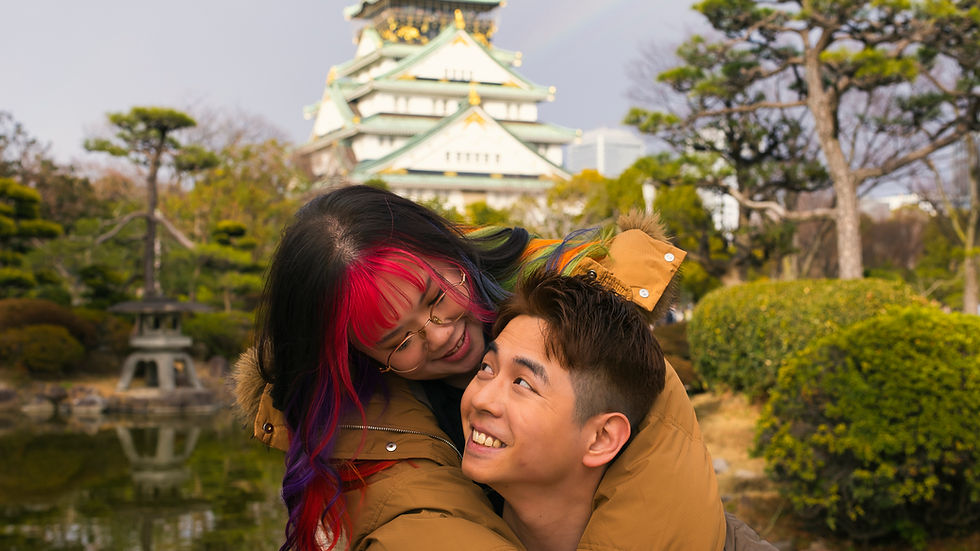
Osaka Castle's stone walls and architecture are dramatically cinematic in winter light, offering strong compositional elements for portrait work. Dotonbori Riverside is quieter in late winter, perfect for evening couple sessions with city light reflections on the water. Nakanoshima Park is often overlooked but beautiful for family sessions when the park is open, calm, and uncrowded.
Light Timing: Late February to Early March
Sunrise happens around 6:30 AM — the light is cool-toned, clean, and serene, and popular locations are empty. Morning sessions between 10:00 AM and 12:00 PM offer soft, diffused light that's flattering for all skin tones. Golden hour begins around 4:00 PM and peaks between 4:30 and 5:15 PM — this is the best light of the day. Blue hour follows from 5:15 to 5:45 PM, delivering moody, romantic, cinematic results.
The recommended session start time for this period is 3:30–4:00 PM to move through late afternoon and into golden hour.
Cherry Blossom Season: The Complete Photography Guide
When Do Cherry Blossoms Actually Bloom in Japan?
Cherry blossom timing shifts slightly each year based on winter temperatures. The typical bloom windows are: Tokyo and Osaka from late March to early April, with peak bloom usually in the last week of March; Kyoto slightly later, often into the first days of April; Hokkaido (Sapporo) significantly later, from late April into early May.
Peak full bloom at any single location lasts approximately 7–10 days. The overall season — from first bloom to petal fall — spans about 2–3 weeks. Because timing shifts year to year, flexibility in your session date is highly valuable.
The Three Phases of Cherry Blossom Bloom — and What Each Looks Like in Photos
Early Bloom (20–50% bloom)
Sparse blossoms against bare branches. Clean, graphic, minimalist. Beautiful for editorial-style couple photos. Less "Instagram sakura," more art. This phase is underrated and often more interesting photographically than full bloom.
Full Bloom (70–100% bloom)
The iconic look. Pink canopy overhead, petals in the air, that unmistakable Japan spring moment. This is what most families and couples are hoping to capture. Sessions during full bloom require early morning timing to beat the crowds at famous spots.
Petal Fall — Hanafubuki
As blossoms fall, they create what the Japanese call hanafubuki — a petal blizzard. This is arguably the most romantic and cinematic phase. Petals in hair, petals on water, petals on shoulders. Less predictable, but when it happens, the photos are extraordinary. If you can be flexible with your session date, chasing hanafubuki is always worth it.
Best Cherry Blossom Photography Locations
Tokyo
Chidorigafuchi Moat is one of Tokyo's most iconic cherry blossom spots — blossoms hanging over the water, boats drifting below. Arrive before 7 AM during peak bloom. Meguro River lined with low-hanging cherry trees is one of the most photographed locations in the city during spring — morning sessions only once bloom peaks. Shinjuku Gyoen has a variety of cherry blossom species that extend the bloom window and offer more variety in a single location. Ueno Park is a classic that works best for early morning or twilight sessions when the lanterns come on under the trees. Koganei Park is less known to tourists and more beloved by locals — more space, more natural light, fewer crowds.
Kyoto
Maruyama Park's iconic weeping cherry tree (shidare-zakura) is one of the most photographed trees in Japan and is illuminated beautifully at night. The Philosopher's Path transforms completely from its winter quiet into a tunnel of pink blossoms — morning sessions are essential here in spring. Kiyomizudera Temple offers a hillside view over Kyoto framed by cherry blossoms that combines landscape and portrait in one frame. Nijo Castle features blossoms against white walls and traditional architecture — less crowded than Maruyama and highly recommended for families. Heian Shrine Gardens provide extraordinary depth with double cherry trees and incredible photographic layering.
Osaka
Osaka Castle Park's moat fills with cherry blossoms creating a reflection shot that belongs on every Japan photography list — arrive very early. Kema Sakuranomiya Park stretches 4km along the Okawa River and is one of Osaka's most beautiful and underrated blossom locations. Expo '70 Commemorative Park is a large, open space with thousands of cherry trees that gives families the room to move, play, and be photographed naturally.
Honest Crowd Management: How to Get Beautiful Photos During Peak Season
Cherry blossom season draws millions of visitors. The single most effective strategy is timing: 6:30–9:00 AM at famous spots gives you near-empty locations and the softest morning light. By 10 AM, locations like Meguro River and Chidorigafuchi are packed. Weekday sessions are noticeably less crowded than weekends even at less-famous spots. Every neighborhood in Tokyo, Kyoto, and Osaka has its own cherry trees — side streets, small shrines, quiet canals — and these often produce the most intimate and personal photos. A photographer who monitors bloom forecasts and can adjust timing by a day or two is invaluable during this window.
What to Wear for Spring Photography Sessions in Japan
General Principles
Japan's spring weather is variable. Cherry blossom season in Tokyo averages 10–18°C (50–64°F). Layering is both practical and photogenic — a light coat or blazer over your outfit adds visual interest and warmth.
Colors that work beautifully during cherry blossom season include soft neutrals such as cream, ivory, warm white, and pale gray; earth tones like camel, tan, sage, and dusty rose; muted pastels in powder blue, blush, and lavender; and classic deep tones like navy, forest green, and burgundy.
Colors to avoid: bright red competes with torii gates and shrine elements; neon or oversaturated colors distract in blossom-heavy compositions; and exact matching within groups tends to look overly staged — aim for a coordinated palette instead.

Outfit Tips by Session Type
Couples: Coordinate without matching. One person in cream, one in camel. A flowy dress with a structured blazer. Simple and timeless. Avoid logos or busy patterns. Scarves and light layers add visual interest and movement in photos.
Families: Choose a palette of 2–3 colors and dress everyone within it. Children in slightly oversized sweaters or light layers photograph beautifully. Comfortable shoes matter — you'll be walking between locations.
Solo travelers: This is your opportunity to be intentional. A single well-chosen outfit in a neutral or muted tone with the blossoms as your backdrop creates images that are striking and deeply personal. Think about what you want these photos to say about this moment in your life.
At temples and shrines, dress respectfully. Covered shoulders and modest hemlines are appropriate and photograph better anyway. Closed-toe shoes are both practical and polished.
Practical Booking & Planning Guide
How Far in Advance Should You Book?
For late winter sessions in February and early March, 3–6 weeks in advance is typical, though closer dates are sometimes available. For cherry blossom season, book a minimum of 6–10 weeks in advance. Photographers with strong portfolios fill up in January and February for late March and April sessions. If you're planning a Japan trip around cherry blossoms, your photographer should be one of the first things you book — not one of the last.
Session Length Recommendations
A 1-hour session covers 2–3 locations and works well for couples or small families, particularly for golden hour or a focused single-location experience. A 2-hour session covers 4–5 locations and is the most popular choice for families, cherry blossom season sessions, and anyone who wants a variety of light and backdrop — this is the sweet spot for most clients. A half-day session of 4 hours is ideal for multi-generational families, milestone trips, or anyone wanting a comprehensive Japan photography experience across different neighborhoods and atmospheres.
What Makes a Good Japan Photo Session
Beyond technical camera skill, the best Japan photography sessions share a few qualities. Knowledge of light is essential — Japan's most photogenic moments are time-sensitive, and a photographer who understands when and where the light falls makes the difference between good photos and exceptional ones. Location flexibility matters because the ability to move between 4–5 spots in a session, reading light and crowd conditions in real time, creates variety and spontaneity that a fixed single location never can. And comfort with the unexpected separates average sessions from memorable ones — a light rain in Japan isn't a disaster, it's an opportunity. Mist on the Meguro River, petals on wet pavement, a quiet alley after rain. The best Japan photos often happen when plans change.
Frequently Asked Questions
What is the best time of year for a photo session in Japan?
Late February through early April offers the most photographically rewarding conditions. Late February and early March are ideal for intimate, uncrowded sessions with exceptional light quality. Late March to early April is best for iconic cherry blossom photos but requires early morning timing to manage crowds. Both windows are beautiful — the right choice depends on what kind of experience and aesthetic you're looking for.
Where are the best places for cherry blossom photos in Tokyo?
Chidorigafuchi Moat, Meguro River, and Shinjuku Gyoen are the top three locations. For less crowded alternatives, Koganei Park and smaller neighborhood shrines offer equally beautiful shots with significantly more space and breathing room.
Where are the best places for cherry blossom photos in Kyoto?
Maruyama Park's weeping cherry tree, the Philosopher's Path, and Nijo Castle are the strongest options for photo sessions. Heian Shrine Gardens are excellent for couples wanting depth and layering. For families, Nijo Castle offers the most space with the least crowd pressure.
How long does cherry blossom season last in Japan?
Peak full bloom at any single location lasts approximately 7–10 days. The full season from first bloom to petal fall spans 2–3 weeks. Exact timing shifts each year, so flexibility in your session date — even by 2–3 days — can make a significant difference in the photos you get.
What should I wear for cherry blossom photos in Japan?
Soft neutrals, muted pastels, and earth tones photograph best against cherry blossoms. Avoid bright red and neon colors. Light layers, a flowy coat, and a scarf add movement and visual interest. Coordinate colors within your group rather than wearing identical outfits.
Should I book a sunrise, morning, or golden hour session in Japan?
During cherry blossom season, sunrise and early morning (6:30–9:00 AM) are strongly recommended at famous locations — crowds arrive quickly after 10 AM. For late winter sessions, golden hour starting around 3:30 PM offers the most beautiful and flattering light of the day.
Is it worth getting photos done outside of cherry blossom season?
Absolutely. Late winter offers cleaner light, peaceful locations, and an intimacy that peak spring cannot match. The photos feel personal and unhurried in a way that crowded blossom season simply doesn't allow. Many clients who have shot both seasons say their late winter photos are the ones they actually frame.
Can solo travelers book a photo session in Japan?
Yes — solo portrait sessions are increasingly popular, particularly among travelers who want to document a meaningful trip authentically and have something more lasting than a selfie. A 1-hour session is typically the right fit and produces a set of images that capture both you and the Japan you experienced.
How do I find a good photographer in Japan as a tourist?
Look for a photographer based in the city you're visiting with a consistent portfolio across multiple seasons — not just cherry blossom shots. Read reviews from other international visitors. Check that they communicate clearly in English, understand your timeline, and offer flexibility around bloom forecasts if you're visiting in spring.
What happens if it rains during my photo session in Japan?
Rain in Japan doesn't mean bad photos — it often means extraordinary ones. Mist over a shrine path, reflections in wet stone, petals on a rain-soaked canal. A good photographer will have a plan for rain: covered locations nearby, a willingness to shoot in light drizzle, and the creativity to turn unexpected weather into atmosphere. Rescheduling is also always an option if conditions are severe.
A Final Note
Japan in spring is one of the most photographically rich places in the world. But great photos here aren't just about being in the right place — they're about being there at the right time, with the right preparation, and with someone behind the camera who knows how to read the light, the crowds, and the moment.
Whether you're planning a late winter session for intimacy and clarity or a cherry blossom session for that iconic Japan spring experience, the principles are the same: plan early, think about light, dress intentionally, and choose a photographer who knows this country across all its seasons.
Sessions in late February, March, and early April fill up quickly. If you're planning a Japan trip this spring, availability is the one thing no guide can help you recover once it's gone.


Comments