
Traditional Kimono Photoshoot in Japan: Everything You Need to Know

There's something transformative about wearing a kimono for the first time. I've watched countless clients step in front of my camera in full traditional dress—and the shift is immediate. Shoulders straighten. Confidence blooms. Suddenly, you're not just visiting Japan; you're becoming part of its centuries-old story. As a Tokyo-based photographer who's captured over 60 sessions across Japan, I can tell you that kimono photoshoots are where the magic of cultural immersion meets stunning visual storytelling.
Why Kimono Photography is Special
A kimono photoshoot isn't just about wearing beautiful clothing—it's about stepping into a different version of yourself. Whether you're an international visitor wanting to experience authentic Japan or a local reconnecting with cultural heritage, the kimono transforms the entire session into something deeply meaningful.

What makes these sessions special is the intentionality. Unlike casual vacation photos, a kimono shoot requires planning, cultural respect, and a photographer who understands how to capture both the garment's intricate beauty and the wearer's genuine emotion. I've photographed families in Kyoto's Gion district, couples at Fushimi Inari Shrine, and multi-generational groups at Senso-ji Temple in Tokyo—each session tells a unique story of connection to Japan.
What to Expect During Your Kimono Session
Let me walk you through a typical kimono photoshoot experience, because knowing what's ahead helps you relax and enjoy the moment.
The Preparation Phase (30-45 minutes): Most clients rent their kimono from a professional rental shop—I recommend booking 2-3 weeks in advance, especially during peak seasons. You'll arrive at the rental location where staff will help you into the kimono, adjust the obi (belt), and ensure everything sits perfectly. This process takes patience and care; there's an art to wearing a kimono properly. I always advise clients to arrive early so there's no rush. The rental staff are incredibly helpful, and this time is part of the experience.
The Session Itself (1-2 hours): Once you're dressed, we head to your chosen location. For couples, popular spots include the bamboo groves of Arashiyama in Kyoto, the vermillion torii gates of Fushimi Inari, or the historic streets of Gion. For families, Senso-ji Temple in Tokyo's Asakusa district offers stunning traditional backdrops with manageable crowds if you time it right.
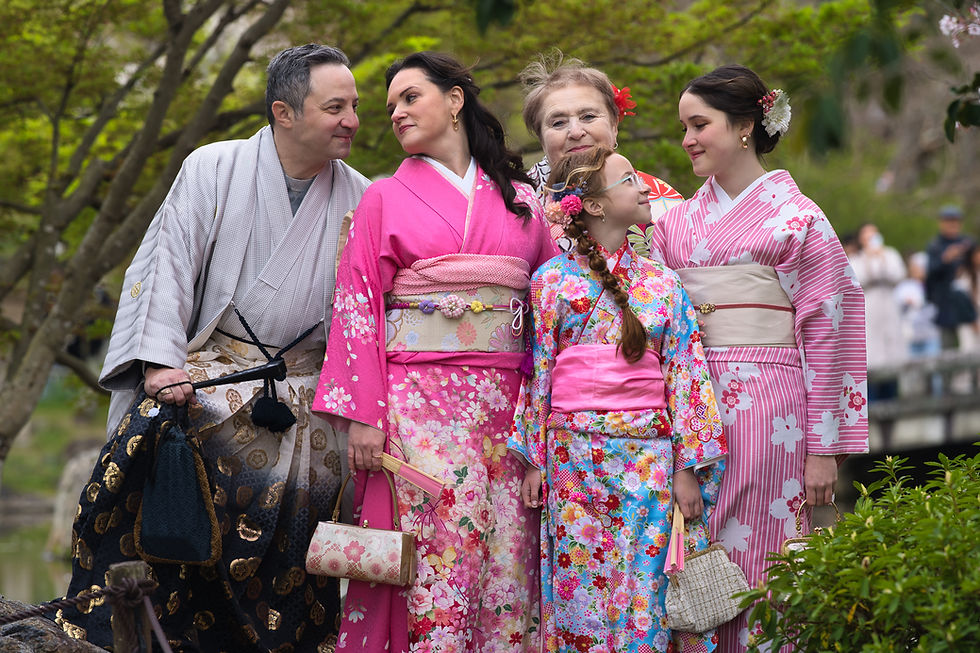
During the shoot, I focus on capturing both posed portraits and candid moments. The kimono's elegant lines photograph beautifully with my Sony A1 and G Master lenses—the tack-sharp detail preserves every intricate pattern in the fabric, while the natural bokeh creates that dreamy, cinematic quality that makes you feel like you've stepped into a period film.
The Return (15-30 minutes): After our session, we head back to the rental shop to return the kimono. Staff will help you change back into regular clothes. This is usually when clients tell me how different they felt wearing traditional dress—how it changed their perspective on the experience.
Choose Your Kimono Style: There are several options. Furisode (long-sleeved) kimonos are traditional for unmarried women and are absolutely stunning in photos. Yukata (casual summer kimono) are lighter and perfect for warm-weather sessions. Hakama (divided skirt worn over kimono) work beautifully for a more formal or samurai-inspired look. Discuss your vision with the rental shop—they'll guide you toward styles that flatter your body type and match your session goals.
Plan Your Location Strategically: I always recommend choosing locations based on the season and your comfort level. Kyoto's Philosopher's Path is magical during cherry blossom season but gets crowded. Fushimi Inari is stunning year-round but requires early morning (6-7 AM) to avoid tourist masses. Tokyo's Meiji Shrine offers a more serene experience with fewer crowds. For families, Senso-ji Temple provides iconic backdrops with good accessibility.

Timing Matters: Early morning sessions (6-8 AM) offer the best light and fewest crowds—especially crucial for kimono shoots where you want that peaceful, authentic atmosphere. Golden hour (late afternoon) creates warm, romantic lighting perfect for couples. Avoid midday harsh sunlight; it's unflattering for everyone, regardless of what you're wearing.
Footwear and Comfort: You'll wear traditional zori sandals or tabi socks with your kimono. These aren't designed for extensive walking. I recommend 1-hour sessions if you're concerned about comfort, or choose locations where we can move between nearby spots without excessive walking. I've learned to build in rest moments—we'll find a quiet shrine corner or garden bench where you can sit, breathe, and let me capture those peaceful, reflective moments.
Cultural Considerations and Respect
Wearing a kimono as a visitor to Japan is generally welcomed and appreciated—it shows respect for the culture. However, there are important guidelines:
• Wear it correctly: Work with professional rental shops that ensure proper fitting. Wearing a kimono incorrectly can be seen as disrespectful.
• Respect sacred spaces: In temples and shrines, be mindful of active worship areas. We'll photograph in appropriate locations and maintain respectful behavior.
• Avoid cultural appropriation: The goal is cultural appreciation and participation, not costume play. Approach the experience with genuine interest in Japanese traditions.
• Follow local customs: Remove shoes when entering certain areas, bow respectfully, and follow any posted guidelines.
In my 60+ sessions, I've found that clients who approach kimono wearing with genuine respect and curiosity have the most meaningful experiences—and the most beautiful photos.
Session Flow: 1-Hour vs 2-Hour Options
1-Hour Kimono Session: Perfect for couples or individuals wanting a focused experience. We'll shoot at one primary location (like Fushimi Inari or a specific temple area) with 3-4 different poses and settings. You'll get 50-80 edited photos. This works well if you're concerned about comfort in traditional dress or have limited time.
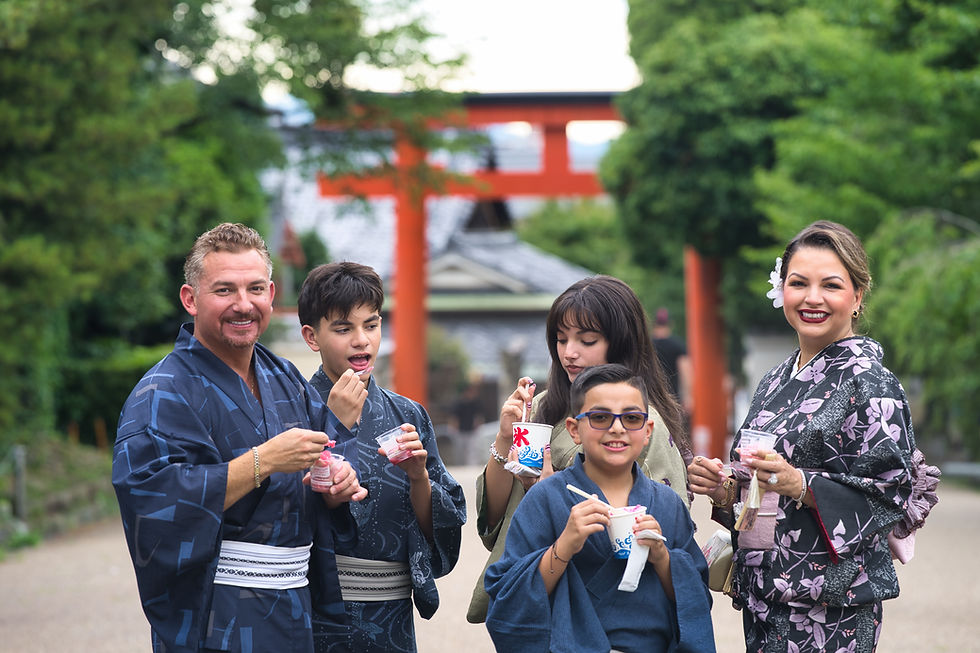
2-Hour Kimono Session: Ideal for families or couples wanting a more comprehensive experience. We can visit 2-3 locations (for example: start at a shrine, move to a garden, finish at a historic street) and capture a wider range of moments. You'll receive 100-150 edited photos showing different moods and settings. This allows for more candid moments and better captures the full experience of wearing kimono in Japan.
Real Examples from My Sessions
I photographed a family of four—grandparents, parents, and two children—all in coordinating kimonos at Senso-ji Temple during autumn. The grandmother, visiting from overseas for the first time, was initially nervous about the traditional dress. By the end of the session, she was laughing, posing naturally, and telling stories about wearing kimono as a young woman. Those candid moments between posed shots became her favorite photos—the genuine joy of three generations connected through tradition.
Another session featured an international couple who wanted to incorporate kimono into their engagement photos. We shot at Philosopher's Path in Kyoto during cherry blossom season. The soft pink blossoms, the traditional kimono, and their genuine affection created images that looked like they belonged in a fine art gallery. They printed a 24x36" canvas for their living room—a daily reminder of their Japan adventure.
Practical Preparation Checklist
✓ Book your kimono rental 2-3 weeks in advance
✓ Decide on session length (1 or 2 hours)
✓ Choose your primary location based on season and crowds
✓ Plan your outfit color/style with rental shop guidance
✓ Arrange transportation to rental location and photo location
✓ Wear comfortable, easy-to-remove clothing under the kimono
✓ Bring a small bag for personal items (rental shops usually provide storage)
✓ Plan for weather (rain backup locations, sun protection)
✓ Eat a light meal before the session (you'll be in the kimono for several hours)
✓ Arrive 15 minutes early to your session start time
Why Professional Photography Matters for Kimono Sessions
You could ask a friend to take photos, but here's what you'd miss: understanding how light interacts with intricate kimono patterns, knowing the best angles to flatter both the garment and the wearer, capturing authentic emotion rather than forced smiles, and having the technical skill to shoot in challenging temple lighting without harsh shadows or blown-out highlights.

My Sony A1 camera with G Master lenses handles these challenges beautifully. The advanced autofocus keeps your eyes tack-sharp even in dim temple interiors. The 50-megapixel resolution captures every detail of the kimono's weaving and patterns—perfect for printing large wall art. The low-light performance means I can shoot inside shrines and temples respectfully, without intrusive flash that disrupts the sacred atmosphere.
But beyond the equipment, it's about experience. I know which temples allow photography, which times have the best light, how to pose you so the kimono drapes beautifully, and how to make you feel confident and comfortable in front of the camera.
Booking Your Kimono Photoshoot
Ready to create your own kimono photography memory? Here's how we work together:
1. Consultation: We discuss your vision, preferred locations, session length, and any specific cultural experiences you want to include.
2. Planning: I'll recommend optimal timing, locations based on current season, and help coordinate with kimono rental shops I trust.
3. Session Day: We meet at your rental location, and I guide you through the entire experience with professionalism and warmth.
4. Delivery: You'll receive beautifully edited photos within 2 weeks, ready to share and treasure.
Kimono sessions typically run ¥45,000-¥75,000 depending on session length and location. Kimono rental (separate) is usually ¥10,000-¥15,000.
Final Thoughts
A kimono photoshoot is more than a photo session—it's a cultural experience, a confidence boost, and a way to create lasting memories of your Japan journey. Whether you're celebrating a special occasion, reconnecting with heritage, or simply wanting to experience Japan authentically, wearing traditional dress and having it professionally photographed is something you'll treasure for decades.
I've watched shy couples become confident, international visitors feel genuinely welcomed into Japanese culture, and families create heirloom photos that tell their unique story. That's what keeps me passionate about this work.
Ready to Create Your Kimono Memory?
Questions about kimono photoshoots? Wondering which location would be perfect for your vision? I'm here to help.
Reach out for a free consultation—let's plan your perfect session and create photos you'll treasure forever.


Comments